Nathan Wood
UN 1845: Dry Ice Transportation Standard
Dry ice is the solid form of carbon dioxide. Carbon dioxide does not form a liquid under standard pressure (1 atm or about 101.3 kilopascal), but rather sublimates from its solid phase into its gas phase. Typically temperatures on Earth are not cold enough to cause the oppose: depositing from the gas phase to solid phase. Dry ice is made by compressing and refrigerating carbon dioxide gas under high pressure.
The cold (-80 C !) anhydrous nature of dry ice makes it perfect for cold storage. However, its cold temperature poses a frostbite risk. Furthermore, dry ice, through its sublimation into a gas, poses a suffocation and toxicity risk as well as a risk of explosion when used inside tight containers.
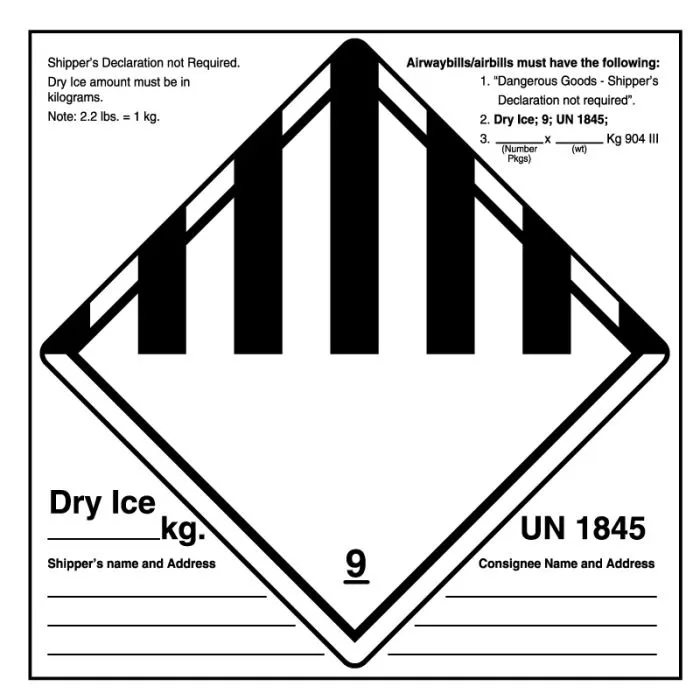
While not explicitly designated as a hazardous substance in of itself, it is classified as hazardous when being shipped in large quantities or by air and water. Because of this, dry ice has a dangerous goods labeling SOP - UN 1845. The UN 1845 standard explicitly requires that containers of dry ice be labeled in accordance to their specifications, and that the mass of enclosed, in kilograms, be explcitly declared on the the outside of the package.